
The Head of Public Relations for the West African Examinations Council (WAEC), John Kapi, has identified specific skill deficiencies in students as the reason for the significant drop in Core Mathematics performance during the 2025 West African Senior School Certificate Examination (WASSCE).
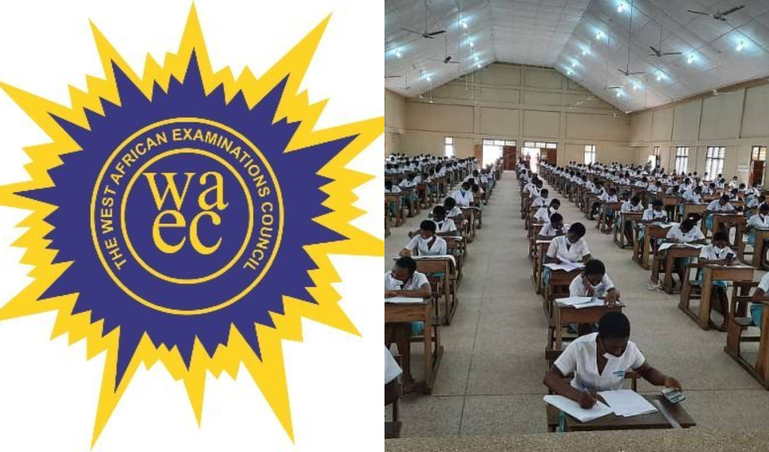
WAEC finally releases provisional 2024 WASSCE Results, withholds results of 319 schools
Mr. Kapi, speaking on the JOY Super Morning Show, identified seven specific areas where candidates demonstrated difficulty. These areas include: translating word problems into mathematical expressions, representing mathematical information in diagrams, solving simple interest applications, constructing cumulative frequency tables and interpreting their results, making deductions from real-life problems, and solving global math-related problems.
READ ALSO: 2025 WASSCE results are a true reflection of students’ academic performance – GES to Osei -Adutwum
“These are areas where the chief examiners can observe weaknesses in the candidates’ performance. Obviously, these are not topics that are outside the syllabus or the test blueprint,” he stated.
The provisional 2025 WASSCE results, released by WAEC, indicate the poorest performance in Core Mathematics in the last seven years. Of the 461,736 candidates who sat for the exam, over half which is 220,008 failed the subject.
WAEC data also highlights a significant drop in the pass rate, with the percentage of candidates scoring grades A1 to C6 in Core Mathematics falling by nearly 18 percentage points compared to the previous year.
Performance in the 2025 examination saw a considerable drop, with only 48.73% of candidates achieving grades A1 to C6, a significant decline from the 66.86% recorded in 2024. Although 209,068 candidates passed with A1-C6, a substantial 114,872 candidates (26.77%) outright failed the subject with an F9 grade.
The examination involved candidates from 1,021 registered schools, marking a slight increase of 0.24% compared to 2024. However, 5,821 candidates (1.26%) were absent from the examination.
According to Joynews, John Kapi noted that the decline in performance does not reflect a deviation from the curriculum. Instead, he emphasised the necessity for improving teaching methods and encouraging students to focus more intently on practical problem-solving skills.