
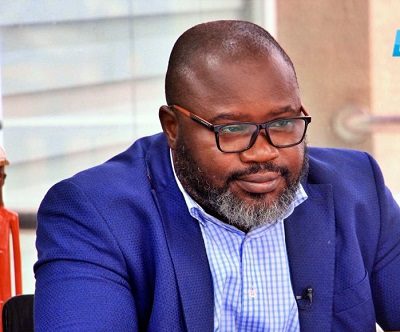
Africa Education Watch’s Executive Director, Kofi Asare, maintains that stricter invigilation contributed to students’ difficulties in the recent exams, despite arguments that the data from previous years weakens that claim.
He acknowledged critiques raised by educationist Dr Prince Armah but clarified the basis of his own position.
“I have a lot of respect for Dr Armah. But the claim that strict enforcement could not have influenced the 2025 results because more schools had results withheld in 2024 is grounded on an incorrect hypothesis,” he said on Metro TV.
Mr Asare explained that the assumption underlying Dr Armah’s point is that higher recorded malpractice should correlate with lower performance.
“That hypothesis assumes that when you have high examination malpractice, the results should be poor. The trend analysis does not support that,” he said.
He outlined data observed from 2018 to 2023, showing that pass rates often rose alongside reported malpractice.
“For example, in 2023 the malpractice rate increased to 10 percent — the highest, and the pass rate also increased to 70 percent, the highest in recent times,” he indicated.
Despite this, Mr Asare insisted that this year’s stricter supervision had real impact on candidates who ordinarily expect assistance during exams.
“When students are used to expecting help from invigilators and teachers, and this new normal intervenes, many struggle, especially those already poorly prepared,” he said.
He cited accounts from schools where external officials were present “in every subject,” creating an environment with “no room for misbehaviour.”
In a nutshell, he said, “Poor preparation meeting strong invigilation will definitely produce difficulties.”