Harvard employs Ghanaian Elom Tettey-Tamaklo, who was charged over a viral anti-Israel protest

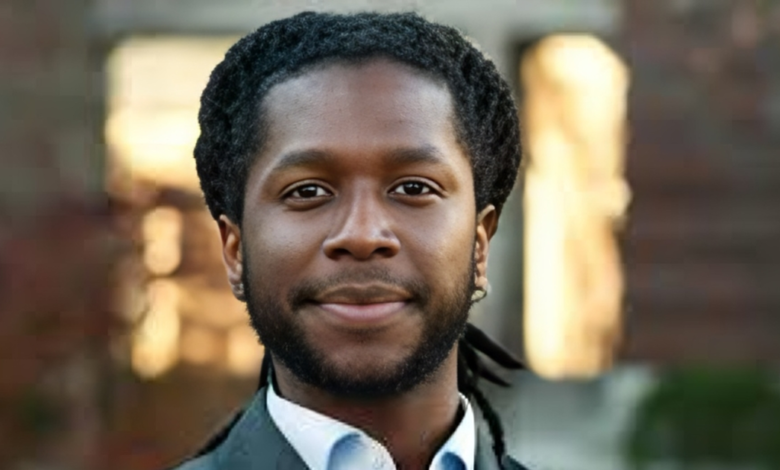
In a move likely to reignite debate over student activism and accountability on elite campuses, Harvard University has appointed Ghanaian graduate Elom Tettey-Tamaklo as a Graduate Teaching Fellow, nypost.com reported
Tettey-Tamaklo, 29, completed a master’s degree in Religion, Ethics and Politics at the Harvard Divinity School in May 2024 and began his fellowship in August.
His professional profile indicates that his new role includes advising faculty on curriculum development, strengthening academic standards, and providing expertise on migration, development, global politics, and other complex policy issues.
Teaching fellows at Harvard typically earn between $3,400 and $11,040 per semester depending on department and workload, the report noted.
MUST READ: Uncertainty deepens as U.S. freezes Green Card and citizenship applications for 19 countries
Tettey-Tamaklo first gained national attention in October 2023 after a video went viral showing him and two other students confronting Israeli first-year business student Yoav Segev during a “die-in” protest following Hamas’ attack on Israel.
He was subsequently charged with misdemeanour assault and battery, drawing scrutiny from the FBI and fierce commentary from national political figures.
A Boston Municipal Court judge later ordered Tettey-Tamaklo to complete an anger-management programme, a Harvard negotiation course and 80 hours of community service. After fulfilling all requirements, the case was dismissed in November 2024.
Harvard did not impose academic penalties but removed him from his student proctor position, citing concerns about “student discomfort”.
Despite the controversy, Tettey-Tamaklo went on to receive a $65,000 Harvard Law Review fellowship, a move that sparked both praise and criticism.
The incident also drew sharp attention from the Trump administration, which accused Harvard of allowing antisemitic harassment and warned that the university risked losing federal funding if it failed to discipline students involved in the confrontation.
Tettey-Tamaklo was not the only student charged. Ibrahim Bharmal, a Harvard Law School graduate who participated in the same protest, faced similar misdemeanour charges and also received institutional support, including a Harvard Law Review fellowship.
Both men denied physically assaulting Segev and accused the Harvard University Police Department of racially biased policing, according to the Harvard Crimson. Police documents, however, identified them among the “most aggressive” demonstrators.
Meanwhile, Segev has filed a federal lawsuit accusing Harvard of failing to protect him and obstructing his attempts to pursue disciplinary action. His suit alleges that the university’s internal processes and communication “misled” him during the criminal investigation.